The Devil's Favorite Number Is Actually Your Best Friend: A Player's Guide to Casino Math
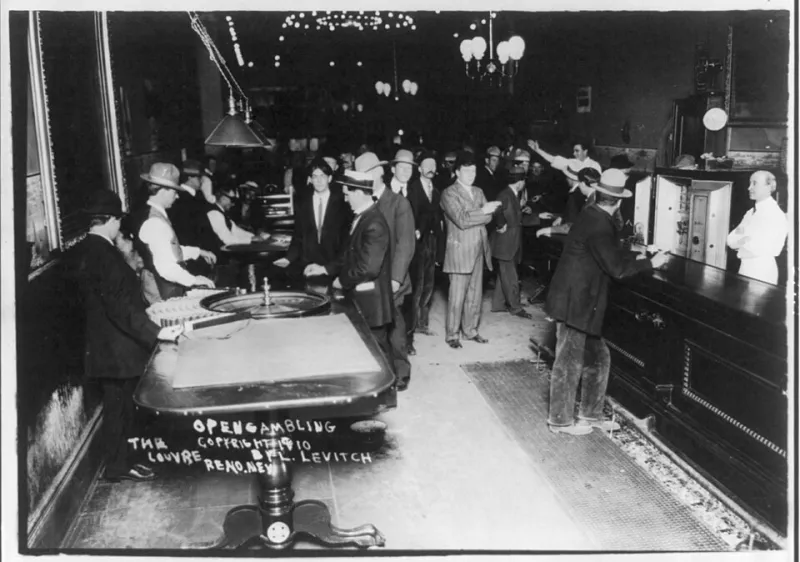
Photo: Miscellaneous Items in High Demand, PPOC, Library of Congress, Public domain, via Wikimedia Commons
Around here, we wear the number 666 like a badge of honor. But let's be honest — most players see that figure flash on screen and think one thing: bad luck.
Here's the thing, though. Luck is the excuse people use when they don't understand the math. And the math behind casino games is a lot friendlier than its reputation suggests. So grab a coffee, because we're going to demystify the numbers that the house would rather you never looked up.
Why 666 Got Such a Bad Rap in the First Place
Before we talk house edges, let's address the elephant in the room — or rather, the beast in the room. The number 666 earned its sinister reputation from the Book of Revelation, where it's described as the "number of the beast." Gematria, an ancient practice of assigning numeric values to letters, tied it to interpretations of the name Nero. From there, it snowballed through centuries of superstition, horror movies, and one very memorable 2006 movie franchise.
But here's what's funny: 666 is just a number. In fact, it's mathematically interesting — it's the sum of the first 36 natural numbers (1+2+3...+36 = 666), and it's a triangular number, which is why craps players of a certain numerological persuasion actually like it. In Chinese-speaking communities, 6 is considered lucky because it sounds like the word for "smooth" or "flowing." Three of them? Triple smooth sailing.
Superstition is fun. Math is profitable. Let's do the math.
House Edge: The Rent the Casino Charges
Every casino game has a built-in advantage for the house — that's the house edge, expressed as a percentage of each bet the casino expects to keep over the long run.
Think of it like rent. You pay it every time you play, and the game's design determines how steep the rent is. A game with a 1% house edge charges you about a dollar per $100 wagered, on average, over time. A game with a 10% edge? That's $10 per $100 — highway robbery by comparison.
Here's the part most players miss: the edge applies to total amount wagered, not your starting bankroll. If you bet $5 a hand and play 100 hands of blackjack, you've put $500 in action — not $5. That's why game choice matters so much.
The Best and Worst Deals on the Casino Floor
Let's put some real numbers on the board:
- Blackjack (basic strategy): roughly 0.5% house edge. Arguably the best deal in the building, if you actually follow the strategy card.
- Craps (pass line): about 1.41%. Take the odds bet behind it and the overall edge drops even further.
- Baccarat (banker bet): around 1.06%. Boring? Maybe. Efficient? Extremely.
- European roulette: 2.7%. American roulette: 5.26%. Same wheel, same colors, wildly different rent.
- Slots: anywhere from 2% to 10%+, depending entirely on the title. This is where reading the fine print pays.
RTP: The Flip Side of the Same Coin
If house edge is what the casino keeps, RTP — return to player — is what theoretically comes back to everyone combined. A slot with 96% RTP pays back 96 cents of every dollar wagered, across millions of spins, to all players collectively.
Two crucial words there: collectively and theoretically. RTP is a long-run average, not a promise for your Tuesday night session. Which brings us to...
Volatility: The Personality of the Game
Two slots can both have 96% RTP and feel completely different to play. That's volatility.
- Low volatility: frequent small wins. Your bankroll lasts longer, your heart rate stays calm. Great for long sessions with a modest budget.
- High volatility: long dry spells punctuated by occasional fireworks. This is where jackpot hunters live — and where bankrolls go to die if you bet too big.
Neither is "better." A player chasing a six-figure hit needs high volatility. A player who wants two hours of entertainment from $50 wants low. Knowing which one you are is half the game.
Putting the Numbers to Work
So what does the devil's math actually tell you to do?
- Play games with edges under 2% — blackjack, baccarat, craps, European roulette.
- Check a slot's RTP in the paytable or info screen before you spin. Reputable studios publish it.
- Match volatility to your bankroll. Big swings require big cushions.
- Use promotions to offset the edge. Bonuses, cashback, and daily deals effectively shrink the house's take — that's just math working for you instead of against you.
Knowledge Is the Real Lucky Charm
The number 666 never hurt anybody. Ignorance of the numbers, on the other hand, empties wallets every single night. The house always has an edge — that's how the business works — but the size of that edge is negotiable, and the negotiation happens before you place your first bet.
Play the games that treat you fairly, size your bets for the volatility you can stomach, and let the superstitious players knock on wood while you check the paytable. The devil's in the details, sure. But so is the advantage.