Your Money's Pace: Which Live Dealer Games Drain Your Bankroll Fastest?
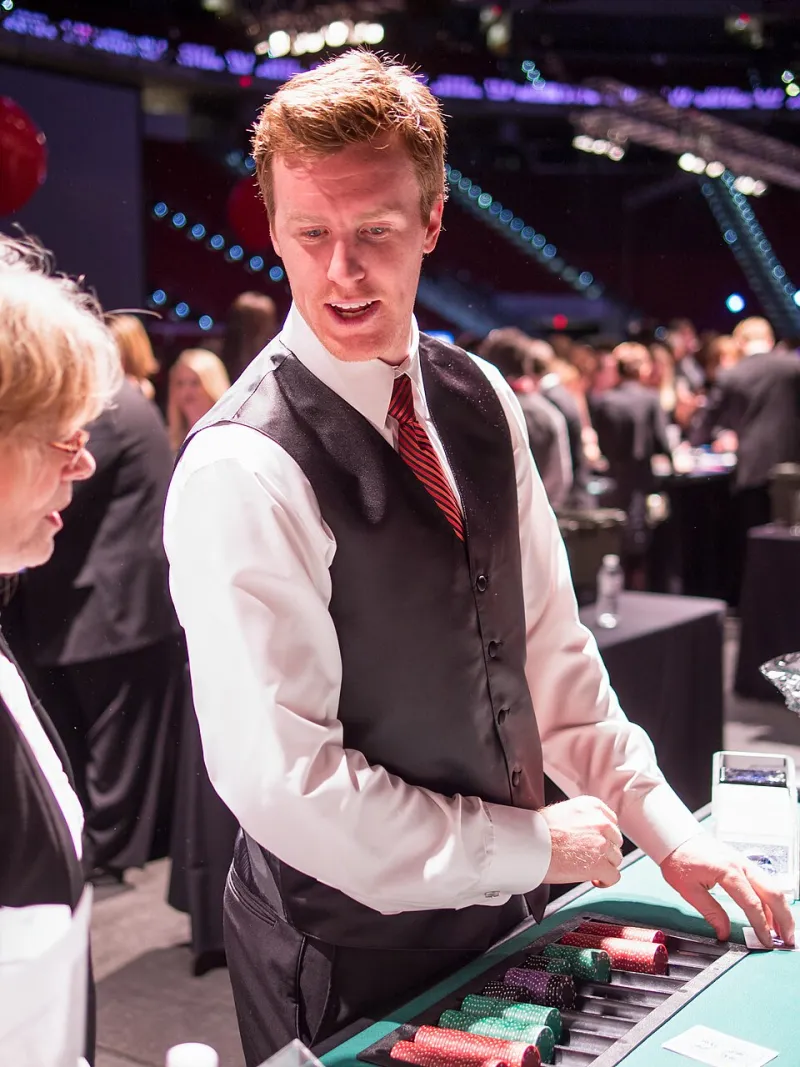
Photo: Benjamin Reed, CC BY-SA 2.0, via Wikimedia Commons
Here's a question most players never ask before sitting down at a live dealer table: how fast is this game going to eat my money?
It's the right question, and it's more useful than the one everybody asks ("which game has the best odds?"). House edge tells you the long-run cost of a game. But pace — hands per hour, bets per hour — tells you how quickly that cost shows up in real time. A game with a modest edge that deals 120 rounds an hour can drain a bankroll faster than a high-edge game that crawls along at 25.
Below, we've ranked the most popular live dealer games by how quickly your money disappears, assuming typical table minimums and average decisions per hour. Think of it as a fuel-efficiency rating for your bankroll.
1. Live Blackjack — The Slow Burn Champion
House edge: ~0.5% with basic strategy | Rounds per hour: 50–80 online | Verdict: gentlest drain in the building
Blackjack played with correct basic strategy is the most bankroll-friendly live game on the menu. The edge is tiny, and even though online dealing is faster than a Vegas table (no shuffling delays, no chip-counting small talk), the math still works heavily in your endurance.
A $10 bettor using basic strategy can expect an average hourly cost of roughly $3–$5. That's less than a fancy coffee. The catch: the edge only applies if you actually play correctly. Hit a hard 16 against a dealer's 10 because it "feels right" and you're donating the advantage right back.
2. Live Baccarat — Simple, Steady, Sleepy
House edge: ~1.06% on banker | Rounds per hour: 60–70 | Verdict: cheap and effortless
Baccarat's reputation as a high-roller game hides how friendly it is to small bankrolls. Bet banker every hand, skip the tie bet entirely, and you're looking at a house edge barely above 1%. There's no strategy to learn, no decisions to second-guess, and no way to play badly — which, honestly, is half its charm.
The main thing that'll hurt you here is speed. Online baccarat rounds come quickly, and the simplicity makes it easy to bet on autopilot. Set a hands-per-session cap if you want to stretch your play.
3. Live Pai Gow Poker — The Endurance Event
House edge: ~2.5% | Rounds per hour: 20–30 | Verdict: the slowest game on the floor
Pai Gow is the tortoise of live dealer games. The frequent pushes (roughly 40% of hands end in a standoff) mean your bankroll barely moves for long stretches. Even with a house edge higher than blackjack's, the sheer slowness of the game means your average hourly loss can rival or beat faster low-edge games.
If your goal is maximum time at the table per dollar, Pai Gow is hard to beat. Just expect a relaxed, chatty pace — the dealer will make conversation whether you're ready for it or not.
4. Live Casino Hold'em — Middle of the Pack
House edge: ~2.5–2.8% with optimal play | Rounds per hour: 30–40 | Verdict: moderate drain, skill-dependent
Casino Hold'em sits comfortably in the middle. Played well, it's reasonably affordable. Played on instinct, the edge creeps up fast — folding decisions matter enormously, and the bonus bet is a trap with a house edge north of 8%. Stick to the main game and learn the basic folding strategy; the side bet is where bankrolls go to die politely.
5. Live Roulette — The Steady Leak
House edge: 5.26% (double-zero American wheels) | Rounds per hour: 40–50 | Verdict: expensive per dollar
Roulette's problem isn't speed — it's the double zero. American wheels carry an edge more than ten times higher than good blackjack, and no betting system changes that. A $10 bettor at an American wheel leaks about $25–$35 per hour on average.
If you can find a single-zero (European) live table, the edge drops to 2.7% and roulette becomes a much more reasonable entertainment purchase. Always check the wheel before you sit down. That one glance is worth more than any betting system ever sold.
6. Lightning-Style Game Show Games — The Fast Drain
House edge: 3–5%+ depending on the game and multipliers | Rounds per hour: 40–60 | Verdict: the most expensive fun per minute
Lightning Roulette and its game-show cousins are engineered for adrenaline: random multipliers, booming sound design, dealers with the energy of a halftime show. The trade-off is cost. Many of these games rebalance the base payouts to fund those big multiplier moments, so the effective house edge climbs even as the excitement does.
These games are fun — genuinely. But treat them like a concert ticket, not a strategy session. Budget a fixed amount for the show, enjoy the ride, and don't mistake the multipliers for an edge.
Turning This Into a Bankroll Plan
Here's the practical takeaway. Estimate your hourly cost as: average bet × rounds per hour × house edge. Then decide what an hour of entertainment is worth to you, and size your bets accordingly.
- Want a three-hour session on $150? Blackjack at $5–$10 a hand will get you there comfortably.
- Craving game-show energy? Give yourself a $50–$75 show budget at Lightning tables and enjoy it guilt-free.
- Mixing it up? Start slow (Pai Gow or blackjack), save the fast games for when your bankroll — and your judgment — are at their freshest.
The devil's in the details, as we like to say around here. The house always has an edge, but you control the pace. Choose a slow table and your money lingers. Choose a fast one and it evaporates. Same dollars, wildly different nights.