Lucky Shirts, Cursed Numbers, and the Devil's Own Digit: What American Gamblers Really Believe
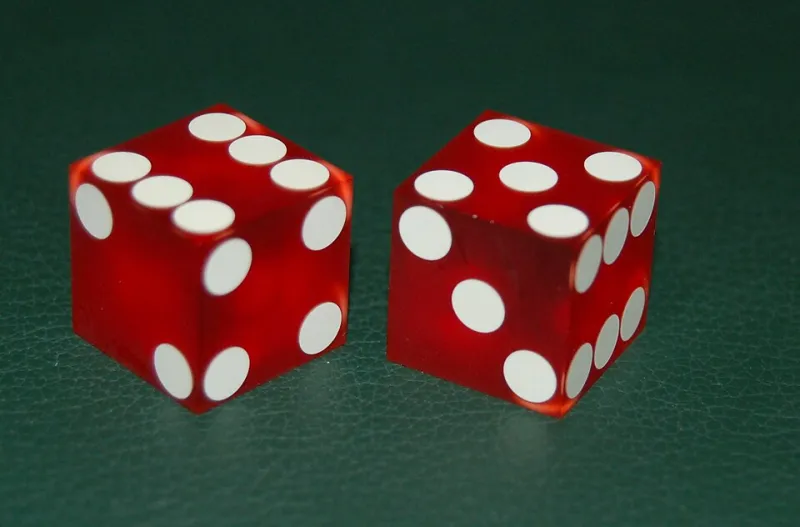
Photo: Roland Scheicher, Public domain, via Wikimedia Commons
Walk into any casino in America — or hang around a live dealer table online long enough — and you'll spot them. The guy who won't sit down until he's tapped the rail three times. The woman who swears her lucky jersey from the 2017 Eagles season is the reason she hit a jackpot on a Tuesday. The craps player who blows on the dice like he's Bugs Bunny in a 1940s cartoon.
Are these rituals doing anything? Short answer: no. Longer answer: sort of, but not in the way you think. Let's dig in.
Why Our Brains Demand Rituals
Psychologists have a field day with gambling superstitions because they're textbook examples of what researchers call the "illusion of control." Our brains are pattern-hunting machines, and when something good happens after an action — wearing red, hitting the spin button at exactly 8:15, whatever — we wire the two together. One study out of the University of Cologne even found that people with lucky charms performed measurably better on tasks, purely because the charm boosted their confidence. The charm didn't change the odds. It changed the person.
Then there's the gambler's fallacy, the granddaddy of them all. That's the belief that a slot machine is "due" after a cold streak, or that red has to hit because black came up five times in a row. Roulette wheels don't have memory. Neither does the RNG running your favorite online slot. Every spin is its own little universe.
The Greatest Hits of American Gambling Superstitions
We polled our own community (and eavesdropped on enough live tables to fill a book) and here are the rituals players swear by:
- The lucky garment. Lucky shirt, lucky socks, lucky boxers we won't elaborate on. The most common superstition by a mile.
- Blowing on dice. Pure cinema, zero math. Craps dice outcomes are random the instant they leave the hand.
- Avoiding the number 13. Entire hotel floors skip it. Some blackjack players refuse a buy-in of $130. The house, notably, does not refuse your 13th dollar.
- Entering through a specific door. Las Vegas locals swear by this one — several casinos famously redesigned entrances after players avoided "unlucky" gates.
- The $50 bill curse. A surprising number of American players refuse $50 bills, calling them cursed. Dealers have stories.
- Saying "you're welcome" when someone says "good luck." Because apparently thanking someone jinxes it.
And then, of course, there's 666. Western tradition branded it the devil's number, but here at ST666 we've always had a soft spot for it — partly because it's our name, and partly because numerology has exactly zero effect on a random number generator. If anything, embracing 666 is the most honest superstition out there: it's a wink at the absurdity of it all. The devil's odds are the odds. Play them anyway.
Harmless Fun vs. Bankroll-Killers
Here's where we put on the responsible-gambling hat, because not all rituals are created equal.
Harmless (and honestly kind of great):
- Lucky charms and rituals that cost nothing. If your lucky hoodie makes your session more fun, wear it into the ground.
- Superstitions that limit play. Some players only gamble on certain days or with a fixed ritual amount. If your superstition caps your spending, it's secretly a budgeting tool.
- Embracing "unlucky" numbers like 13 or 666 as a joke. Confidence is fun. Terror over a numeral is not.
Where superstition gets expensive:
- Chasing "due" machines. This is the gambler's fallacy in its most expensive costume. Doubling down on a cold streak is how sessions go from fun to ugly fast.
- Rituals that override strategy. Blowing on dice is fine. Refusing to hit on 16 because your "lucky feeling" says stand is not fine. Basic strategy exists for a reason.
- Betting more to "honor" the ritual. If your lucky charm demands a bigger wager to "work," it's not a charm. It's a leak.
- Attributing losses to a broken ritual. "I forgot my lucky watch, that's why I lost." No — you lost because the house edge is the house edge. Blaming the watch invites bigger bets to "get even."
The Verdict From the Devil's Desk
Superstition in gambling is like hot sauce on wings: it doesn't change what's underneath, but it makes the experience yours. Wear the shirt. Tap the rail. Blow on the dice if it makes you grin. Just know that the RNG, the wheel, and the deck don't know you're wearing it.
The real edge in gambling isn't luck — it's knowing the math, managing your bankroll, and knowing when to log off. The rituals? Those are just the soundtrack. And at ST666, we think the devil's number makes a pretty great soundtrack.