The Devil's Fine Print: Where You Can Actually Bet Online in America This Year
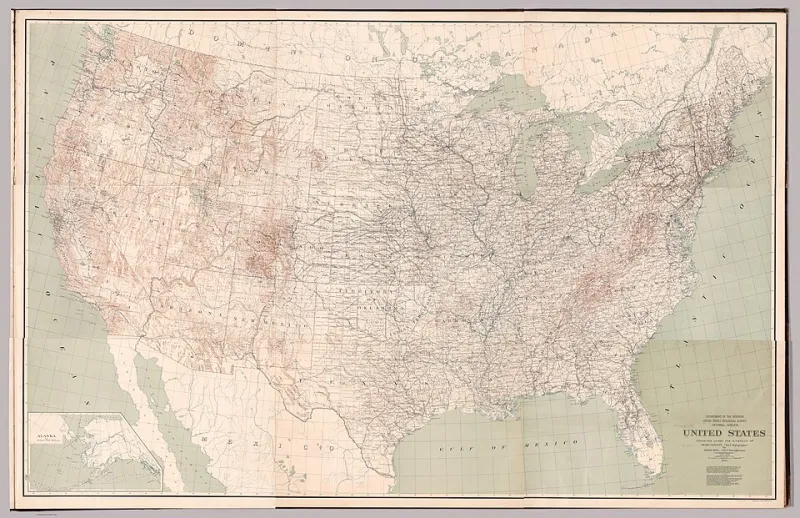
Photo: John Wesley Powell / Henry Gannett, Public domain, via Wikimedia Commons
Here at ST666, we spend a lot of time talking about odds — the ones at the blackjack table, the ones on the slots, the ones the house swears aren't stacked. But there's a set of odds most players never think about until it's too late: the odds that what you're doing is actually legal in your state.
American gambling law is less a system and more a carnival maze. Cross a state line and the same app on your phone can go from perfectly licensed to legally radioactive. So before you chase that welcome bonus, let's walk through the map — and the fine print the devil loves to hide in.
The Three-Tier Reality of American Online Gambling
Most players assume online gambling is either "legal" or "not legal." Wrong. In 2026, there are really three tiers:
Tier one: fully regulated. A handful of states — Connecticut, Delaware, Michigan, New Jersey, Pennsylvania, Rhode Island, and West Virginia — offer licensed online casinos with real oversight, real payouts, and real recourse if something goes sideways. These are the states where you can play a live dealer table at midnight and know a regulator has your back.
Tier two: sportsbooks only. Dozens of states have legalized online sports betting but not online casinos. If you're in Arizona, Colorado, or Virginia, you can bet the Sunday slate from your couch — but that online slot session technically has no legal home-state option.
Tier three: sweepstakes and social gaming. This is the gray zone. Sweepstakes casinos operate in most states using a dual-currency model — one currency you play with, another you can redeem for prizes. Some states have started cracking down; others haven't decided yet. If you're playing a sweepstakes site, read the terms like your bankroll depends on it. Because it does.
What Changed in 2025
This year brought movement in a few directions at once.
Rhode Island's online casino market matured from its late-2024 launch, proving that small states can run lean, functional operations. Meanwhile, legislative conversations heated up in states like Maryland, Illinois, and Indiana, where online casino bills keep surfacing — and keep stalling in committee. The pattern is familiar: sports betting sailed through legislatures because it's easy to tax and popular with constituents. Online casinos face louder opposition from brick-and-mortar gaming interests who worry about cannibalizing their floor traffic.
On the flip side, a few states moved to restrict things. Sweepstakes gaming faced new scrutiny in several legislatures, with some platforms voluntarily exiting certain states rather than fight it out in court. If you were playing a sweepstakes app in January and it's gone now — that's why.
The Gray Zones Players Wander Into
This is where the devil's fine print gets teeth. Three mistakes we see constantly:
Mistake one: VPN roulette. Some players use a VPN to spoof their location and access an out-of-state casino. Beyond violating the site's terms, you're risking your entire bankroll — if the operator detects it, withdrawals can be frozen and accounts closed. That $2,000 balance? Good luck getting it back.
Mistake two: assuming offshore equals okay. Offshore sites have been operating for decades, and plenty of Americans play on them. But if a dispute arises — a voided withdrawal, a rigged game, a sudden shutdown — you have zero legal protection. No regulator, no recourse, no refund.
Mistake three: confusing daily fantasy and casinos. DFS is legal in most states, but that legality doesn't extend to the casino-style games some platforms bolt on. Check what you're actually playing.
Which States Are Next?
If we had to put money on it — and you know we would — the next wave of online casino states likely includes Maryland and Illinois, both of which have the tax infrastructure and political appetite. New Hampshire and Vermont have floated studies and working groups. Don't expect Texas or California to move soon; both are too big, too divided, and too contested between tribal and commercial interests for anything to pass cleanly.
How to Play It Safe and Legal From Home
A quick checklist before your next session:
- Verify the license. Legal sites display their state regulator's logo. If you can't find it in 30 seconds, close the tab.
- Confirm your location. Licensed apps use geolocation. If a site isn't asking for your location, that's a red flag, not a convenience.
- Check the sweepstakes rules. If you're on a social casino, know your state's stance before you buy anything.
- Keep records. Legal winnings are taxable. The IRS doesn't care how fun your night was.
The Bottom Line
The house edge is a known quantity. The legal edge — the risk of playing where you shouldn't — is entirely avoidable. Know your state, verify your operator, and keep your play on the right side of the line. The devil's fine print only catches the players who never read it.